
What Does Collagen Powder Do for Skin, Joints and Muscles?
Collagen powder is promoted for everything from smoother skin to stronger joints and faster muscle recovery. Some of those ideas have a plausible mechanism and supporting trials; others run far ahead of the evidence.
The most defensible summary is that hydrolysed collagen peptides may modestly support certain skin and joint outcomes when used consistently. Collagen is not a wrinkle eraser, a cure for joint disease or a complete replacement for high-quality dietary protein.
What is collagen?
Collagen is the main structural protein in connective tissues. Different collagen types help form skin, tendons, ligaments, cartilage, bone and other structures.
Dietary supplements usually contain hydrolysed collagen peptides: collagen that has been broken into smaller chains to dissolve and digest more easily. Digestion breaks those peptides down further, although some small collagen-derived peptides may reach the circulation and act as biological signals.
Most powders come from bovine, marine, porcine or poultry sources. “Marine collagen” is not automatically more effective; source, peptide profile, testing, allergens, sustainability and the amount taken all matter.
What happens after you drink collagen?
The powder does not travel intact directly to a wrinkle or knee. It is digested, absorbed and used within normal metabolism. Collagen provides abundant glycine, proline and hydroxyproline—the amino-acid pattern found in connective tissue—but the body decides where nutrients are used.
This distinction matters because a supplement can support the supply of building blocks without guaranteeing a visible or clinical outcome. Overall nutrition, age, training, sun exposure, smoking, sleep and medical conditions still influence skin and connective tissue.
Collagen for skin: what does the evidence say?
Randomised trials and meta-analyses have reported improvements in measures such as skin hydration and elasticity after oral hydrolysed collagen. A 2021 systematic review and meta-analysis found favourable pooled effects, but formulations, doses, duration and study quality varied.
The evidence also deserves a careful funding lens. A newer meta-analysis on collagen supplements and skin ageing found that apparent benefits were not present in subsets without pharmaceutical-company funding or in higher-quality studies. That does not prove collagen never works; it means confident anti-ageing promises are not justified.
A fair expectation is a possible modest change in hydration or elasticity over weeks to months—not elimination of wrinkles, scars, pigmentation or sun damage. Daily sunscreen, not smoking, adequate food and evidence-based skincare remain more important foundations.
Collagen for joints and tendons
Collagen peptides have also been studied for activity-related joint discomfort, osteoarthritis symptoms and connective-tissue adaptation around exercise. A systematic review of collagen supplementation with exercise found the most consistent positive findings in joint function and pain, while emphasising small studies and the need for stronger research.
This is best described as possible symptom support, not repair of a torn ligament or reversal of arthritis. Pain that is severe, swollen, traumatic, persistent or associated with weakness needs assessment. Training load, strength, sleep, body weight where relevant and rehabilitation often matter more than a powder.
Does collagen build muscle?
Collagen contains protein, but it is low in several essential amino acids and lacks tryptophan, so it is not a complete protein. It is also lower in leucine than high-quality sources commonly used to stimulate muscle protein synthesis.
Studies combining collagen with resistance training sometimes report improvements in body composition or strength, but collagen generally stimulates muscle protein synthesis less than an equal amount of higher-quality protein. The systematic review of collagen and exercise found increased collagen synthesis in some protocols without a significant advantage for muscle protein synthesis compared with isonitrogenous higher-quality protein.
If building or preserving muscle is the goal, prioritise sufficient total protein from complete sources and progressive resistance training. Collagen can be an additional connective-tissue-focused ingredient; it should not displace meals or a complete protein supplement.
What about hair and nails?
Hair and nails contain keratin rather than collagen. There are small studies and many personal reports, but the evidence is less robust than marketing often suggests. Brittle nails or hair shedding can also reflect iron deficiency, thyroid disease, skin conditions, illness, energy deficiency or other causes.
Do not use collagen as a substitute for investigating sudden or unexplained changes.
How much collagen do studies use?
Trials use different products and amounts. Common daily ranges include approximately 2.5–10 g for skin-focused studies and 5–15 g in joint, tendon or exercise research. Those ranges describe research protocols, not a universal prescription.
The label matters because a blend’s scoop size is not necessarily its collagen dose. Check how many grams of actual collagen peptides are provided per serving and whether other active ingredients contribute meaningful amounts.
Start with the product instructions. A larger amount is not automatically better, and results from one branded peptide formula may not transfer perfectly to another.
When should you take collagen?
There is no well-established best time for general skin or joint use. Consistency matters more than morning versus evening.
Some exercise studies provide collagen or gelatin with vitamin C roughly 30–60 minutes before loading exercise, based on the idea of making amino acids available around connective-tissue stimulation. This is a specific research strategy, not proof that everyone must time collagen before training.
Choose a time that fits your routine. Mix the powder into a drink or food according to the label. If it causes digestive discomfort, try a smaller serving with food or stop using it.
Does collagen need vitamin C?
Vitamin C is required for normal collagen formation in the body. A frank vitamin C deficiency impairs connective tissue, but that does not mean very large supplemental doses produce extra collagen in a well-nourished person.
A diet containing fruit and vegetables will usually provide vitamin C. If a collagen blend includes vitamin C, judge it by the stated amount and your total intake rather than assuming more is better.
How long before you notice anything?
Most studies that report changes run for at least several weeks, often eight to twelve weeks or longer. Skin, tendon and cartilage do not transform overnight.
Before starting, define one outcome: skin comfort, a standardised photo, or a repeatable joint-symptom scale. Keep training and skincare reasonably stable. If nothing meaningful changes after a fair trial, continuing indefinitely may not be worthwhile.
How to choose a collagen powder
Look for:
● the collagen source and any relevant allergen information
● grams of collagen peptides per serving
● transparent amounts for added ingredients
● independent quality or contaminant testing where available
● a taste and format you can use consistently
● claims that acknowledge uncertainty
Avoid products promising to rebuild cartilage, eliminate wrinkles, detox the body or guarantee hair growth.
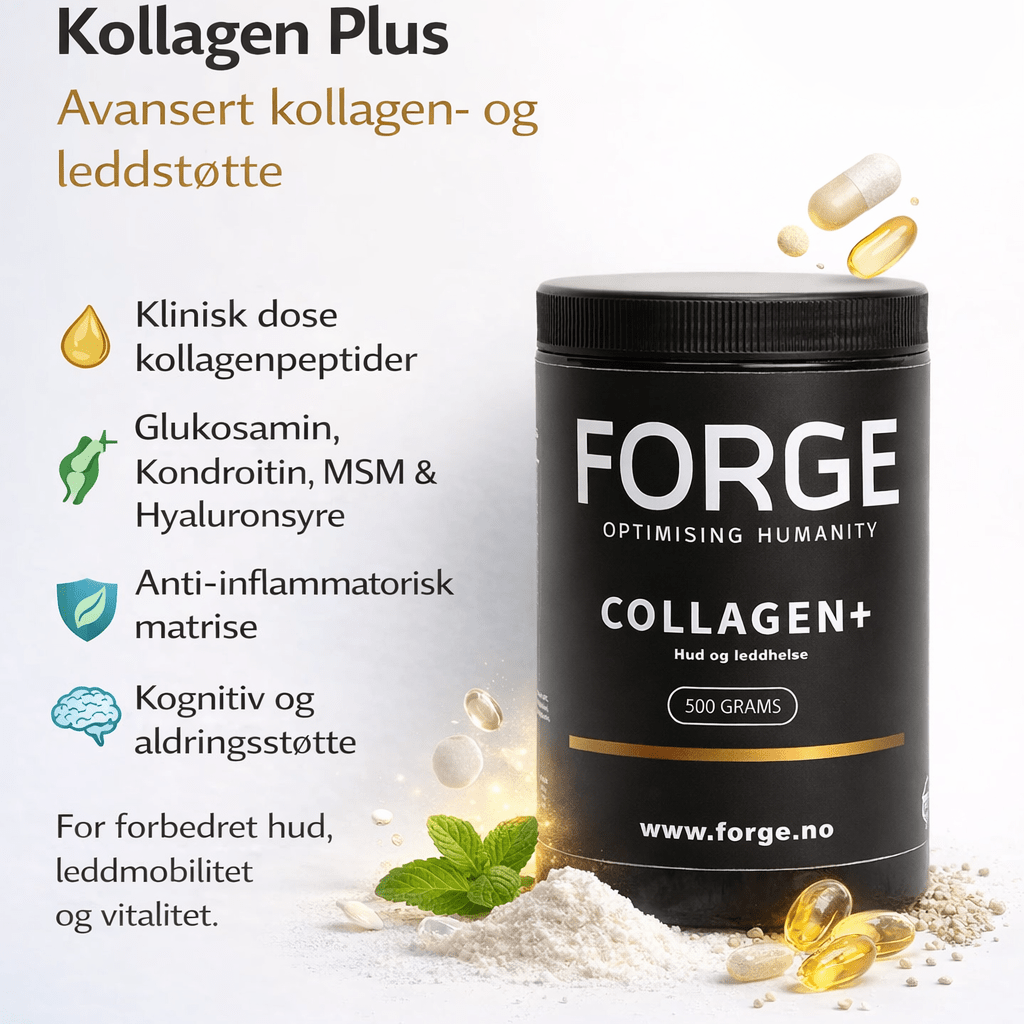
Forge Collagen+ combines hydrolysed collagen peptides with additional ingredients in a vanilla-flavoured blend. Consult the current label for the precise formula, serving size, allergens and directions; producer briefs and older pages may not reflect the product now sold.
Who should be cautious?
Do not use a product containing a source to which you are allergic. Fish-derived collagen may be unsuitable for people with fish allergy, and all products should be checked for individual ingredients.
Ask a healthcare professional before supplementation if you are pregnant or breastfeeding, under 18, have kidney, liver or metabolic disease, follow a medically restricted diet, or take medication that could interact with added ingredients. Persistent pain or major skin, hair or nail changes deserve assessment rather than self-treatment alone.
Frequently asked questions
Can collagen replace my normal protein powder?
Not when the main goal is muscle protein synthesis. Collagen is an incomplete, lower-leucine protein. Use complete protein sources to meet general protein needs.
Is marine collagen better than bovine collagen?
Not automatically. Different sources and collagen types may suit different preferences, but dose, product quality, allergens and the evidence for the exact formula matter more than a broad “marine” or “bovine” label.
Can I take collagen every day?
Many trials use daily intake, and collagen is generally well tolerated. Follow the label and consider the full ingredient list, especially in multi-ingredient blends.
Will collagen remove wrinkles or cure joint pain?
No such outcome can be promised. Some studies report modest average improvements, but results vary and stronger treatments or medical assessment may be appropriate.
The bottom line
Collagen powder may modestly support skin hydration, elasticity and some joint outcomes, but the evidence is heterogeneous and vulnerable to study-quality and funding concerns. It is not a complete muscle-building protein or a shortcut around skincare, training, rehabilitation and a balanced diet.
Choose a transparent product, use it consistently for a defined trial and measure one meaningful outcome. Continue only if the benefit is worth the cost and effort for you.
This article provides general information and is not a substitute for individual medical or nutritional advice.
Sources
● de Miranda et al.: hydrolysed collagen and skin ageing meta-analysis
● Rustad et al.: collagen supplements and skin ageing meta-analysis
● Khatri et al.: collagen, exercise, joints and recovery systematic review


Comments