
Red Light Masks and LED Therapy: The Complete Guide
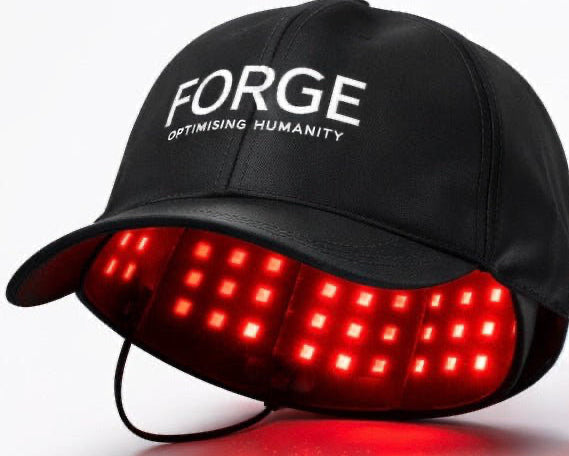
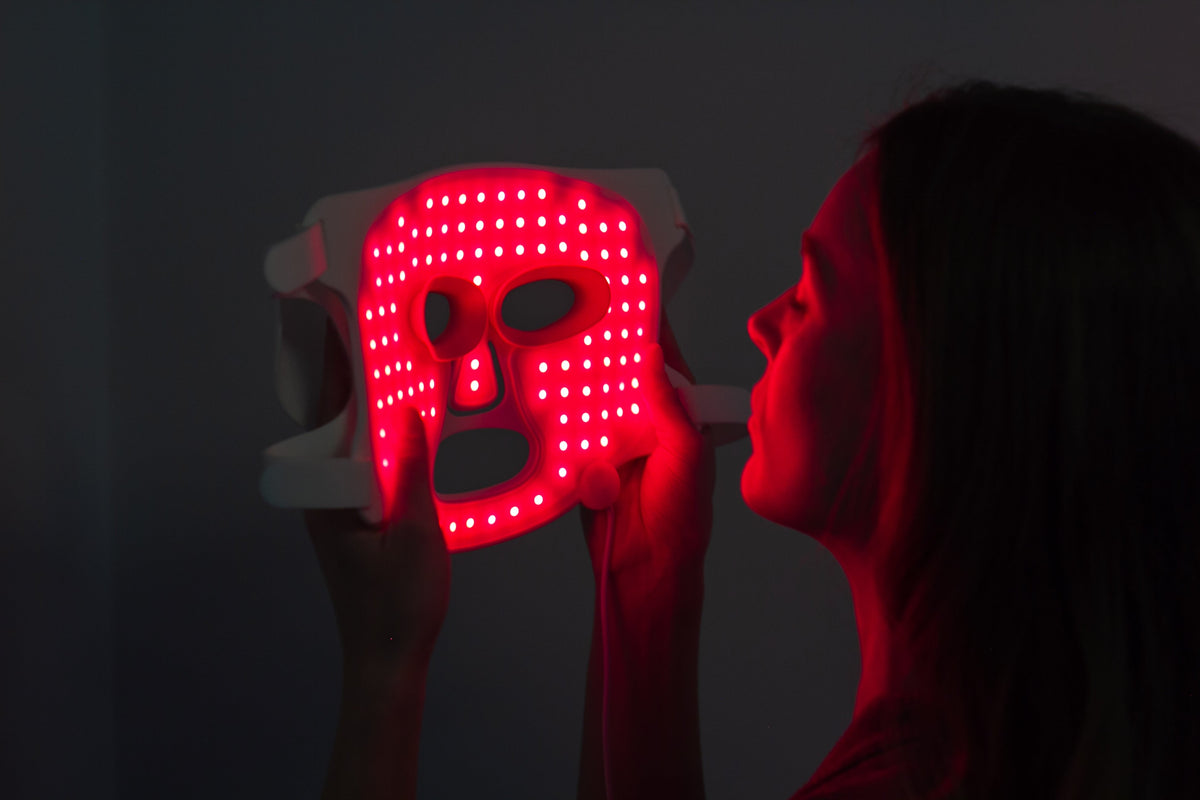
Red light therapy has moved from laboratories and clinics into everyday homes. It is now available as an LED face mask, a cap for the scalp, a blanket for larger areas and panels in many sizes. That makes the technology easier to use—but also harder to compare.
Two devices can both glow red while delivering very different wavelengths, intensity, coverage and total dose. The number of LEDs is only one part of the story. A useful product must also fit the treatment area, provide clear operating instructions and be comfortable enough to use consistently.
This guide explains what red light therapy is, what the research can and cannot tell us, and how to evaluate a home device without relying on inflated marketing language.
What is red light therapy?
Red light therapy is a form of photobiomodulation, often shortened to PBM. It uses low-intensity visible red and near-infrared light to influence biological processes without the tissue heating that defines infrared sauna therapy.
It is not ultraviolet light, so it does not tan the skin. It is also not automatically a heat treatment. Some warmth can develop during a session, but the intended input is light energy rather than sweating.
One leading explanation is that light absorbed by cells can influence mitochondrial activity, cell signalling, local circulation and the balance of reactive oxygen species. The familiar phrase “supports ATP production” describes only part of a more complex process. The response depends on the tissue, wavelength, dose and treatment protocol. A dermatology review of photobiomodulation mechanisms and clinical applications describes both the potential and the importance of appropriate parameters.
What is red light therapy used for?
Research covers several applications, but the evidence is not equally strong for every goal or every device.
Skin and visible signs of ageing
Red and near-infrared light have been studied for skin texture, elasticity, fine lines and recovery. A controlled trial of red and near-infrared light reported improvements in several skin measures. That is encouraging, but it does not mean every home mask will produce the same result. The wavelength, delivered dose, treatment schedule and outcome measurements must be comparable before findings can be transferred from one device to another.
A red light therapy mask can make facial treatment convenient because the light source remains at a relatively stable distance. The practical value is often repeatability rather than simply having the highest advertised power.
Hair and scalp
Low-level light therapy has mainly been studied for androgenetic alopecia, the common pattern form of hair loss in women and men. A systematic review of light-based treatment for pattern hair loss found encouraging evidence, while also noting differences among devices and protocols.
These findings do not apply to every cause of shedding. A light device cannot correct iron deficiency, thyroid disease, scarring alopecia or an acute illness-related change. Sudden, patchy, painful or unexplained hair loss should be assessed by a doctor or dermatologist.
The Forge LED cap is shaped for repeatable coverage of the scalp. Our detailed guide to red light caps for hair explains diagnosis, device selection and realistic timelines.
Exercise and recovery
Photobiomodulation has also been investigated for exercise performance, muscle soreness and recovery markers. Results are mixed and depend heavily on the device, body area, timing and dose. A recent systematic review of whole-body photobiomodulation found only a small evidence base and no clear benefit for performance or recovery markers in the included studies.
For broader coverage, a red light therapy blanket is a practical format. It should not be confused with an infrared sauna blanket, where heat and sweating are the main experience.
Why wavelength matters
Wavelength, measured in nanometres (nm), identifies the part of the light spectrum emitted by a diode. Visible red wavelengths are commonly used for more superficial targets, while near-infrared wavelengths are invisible and can penetrate farther into tissue. Deeper does not automatically mean better; the relevant wavelength depends on the target and protocol.
Forge devices use different wavelength combinations, so always check the product specification and manual for the exact model. The current Forge cap specification lists 633 nm red light with 830 nm and 1072 nm near-infrared light. Because 1072 nm is near-infrared, calling it “deep infrared” can create confusion with heat-based infrared products.
Some multicolour masks also include blue, green or yellow light. Blue light has been studied in acne-related settings, but evidence behind many broad colour claims remains limited. More colours do not automatically make a device better for your particular goal. Our article “What Really Is Light?” explains the spectrum in plain English.
Dose: why more is not always better
A photobiomodulation dose is not determined by LED count alone. The main variables are:
● Irradiance (mW/cm²): the rate at which light power reaches a given area.
● Time: how long the area is exposed.
● Energy density (J/cm²): irradiance multiplied by time, with the units converted correctly.
● Distance and fit: both affect how much light actually reaches the skin.
● Coverage: an average measurement can hide weak or uneven areas.
Photobiomodulation may follow a biphasic dose response: too little may be insufficient, while substantially more is not necessarily more effective. This pattern is discussed in research on the biphasic response in low-level light therapy.
Do not copy the session length from an unrelated mask or panel. Use the protocol for the specific device. For a deeper explanation and a worked formula, read Does Red Light Therapy Really Work? Only If the Dose Is Right.
How to choose the right device

Look for exact wavelengths, irradiance measured at a realistic treatment distance, a clear session protocol, understandable safety information and a meaningful warranty. Terms such as “clinical grade” and “maximum power” tell you little without a measurement method.
A sensible home routine
1. Read the manual for the exact product.
2. Use the device on clean, dry skin or scalp if directed.
3. Begin with the recommended time and frequency.
4. Do not double a session to compensate for a missed day.
5. Follow the product’s eye-safety instructions and never stare into high-intensity LEDs.
6. Track one outcome under consistent conditions rather than changing several variables at once.
Skin and hair usually change over weeks or months, not after one session. Standardised monthly photographs are generally more informative than checking the mirror in different light every day.
Red light therapy is generally well tolerated when an appropriate device is used as directed, but temporary redness, warmth, headache or irritation can occur. Ask a healthcare professional before use if you have a photosensitive condition, an eye condition, are pregnant, or take medication that can increase light sensitivity. Stop if you experience pain, visual disturbance or a persistent reaction.
Frequently asked questions
How often should I use red light therapy?
There is no universal schedule. Many home protocols use several short sessions per week, but the correct frequency depends on irradiance, distance, treatment area and goal. Follow the instructions for the exact device.
How quickly will I see results?
It depends on the target and the individual. Skin and hair outcomes are normally evaluated over weeks or months. A lack of immediate change does not mean that a longer or stronger session is appropriate.
Why can I not see the near-infrared LEDs?
Near-infrared wavelengths such as 830 and 1072 nm are outside human vision. A diode can therefore be working normally even when it does not appear to glow.
Does red light therapy replace skincare or medical treatment?
No. It is best considered a possible addition. Sleep, nutrition, sun protection, exercise and appropriate medical care remain the foundations.
The bottom line
A good red light routine combines a clear goal, relevant wavelengths, a reasonable dose and consistent use. Choose the device format according to the area you want to cover, examine the specifications critically and allow enough time to evaluate it. Red light therapy is not a miracle cure, but it can be a practical, non-invasive tool when the protocol and expectations are realistic.
Explore the Forge red light therapy collection to compare home-use formats.
This article provides general information and is not a substitute for individual medical advice, diagnosis or treatment.
Sources
● Maghfour et al.: Photobiomodulation CME Part I
● Dompe et al.: Photobiomodulation—mechanisms and applications
● Wunsch and Matuschka: controlled red and near-infrared light study
● Pillai and Mysore: low-level light therapy for androgenetic alopecia
● Huang et al.: biphasic dose response
● Álvarez-Martínez et al.: whole-body photobiomodulation systematic review

Kommentarer